
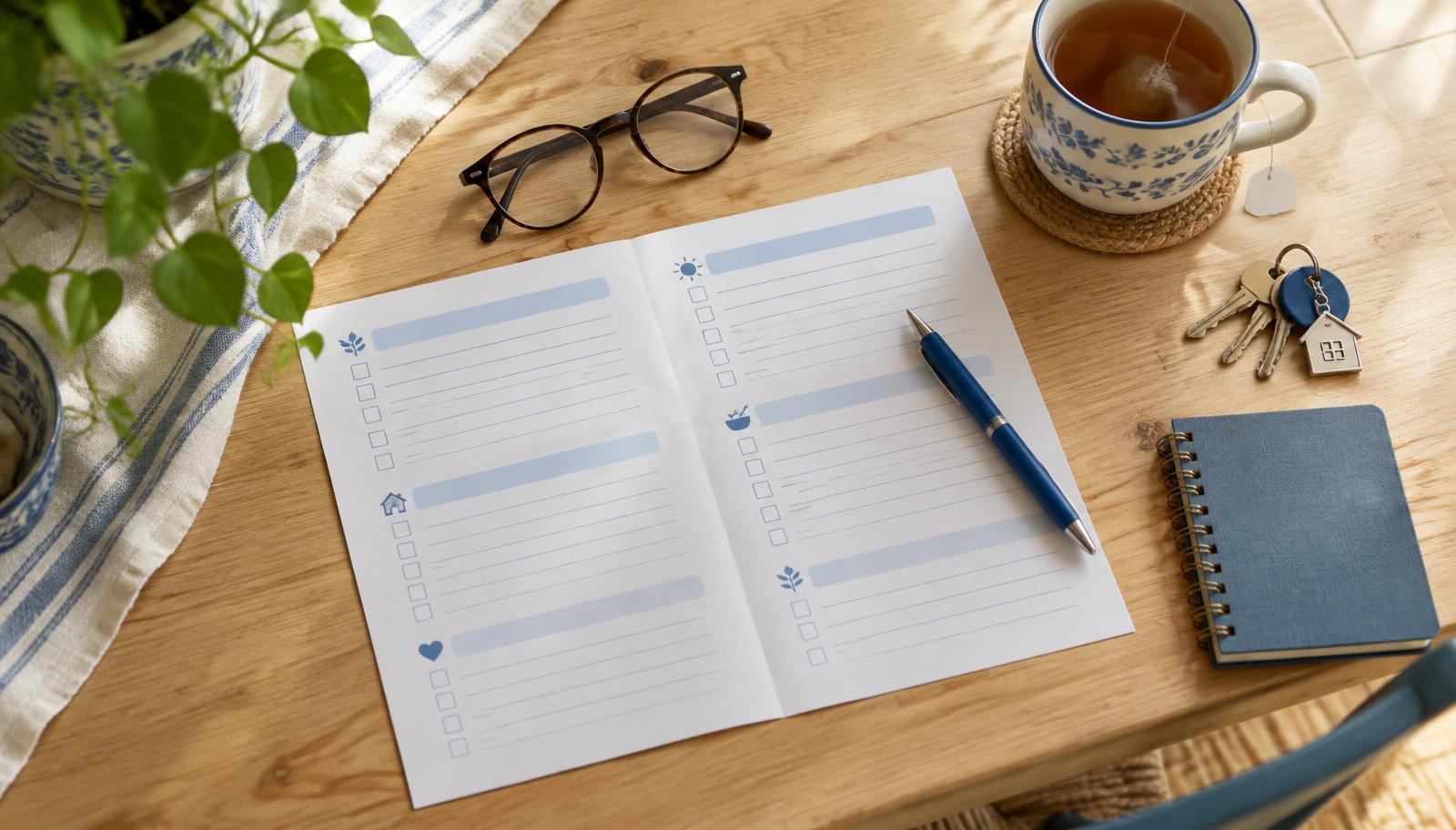
Get your free checklist
Download the free UK will checklist (PDF). It's two pages, free to print, and you don't need an account. You'll also find it on our free will template page.
Please note: this checklist helps you plan. It is not a will and it is not legal advice. Filling it in does not make a will.
1. Check which rules apply to you
England and Wales, Scotland and Northern Ireland each have slightly different rules for wills. Make a note of where you live before you start. If you live abroad or own a home in another country, it's worth asking a solicitor which rules apply.
Jot down your full name, address and any names you've used before. Keep the checklist somewhere private. There's no need to write down passwords or full bank account numbers.
2. List what you own and who should get it
Write a simple list of what you own: your home, savings, investments, belongings and online accounts. Add anything you owe, and anything you own jointly with someone else.
Some things don't pass on through your will. A home or bank account you own jointly, a pension or a life insurance payout may go straight to someone else. Check each one.
Then think about:
- any special gifts, like a ring or a sum of money for a grandchild
- who gets everything else (this is called "the rest of your estate")
- what should happen if someone you name dies before you
3. Choose your people, and talk to them
Executors are the people who sort out your affairs after you die. Ask them first if they're happy to do it, and pick a back-up in case they can't.
If you have children under 18, think about who you'd want to look after them (a guardian) and talk to that person.
Witnesses watch you sign your will. In England and Wales, don't ask anyone who will receive something from your will, or their husband, wife or civil partner. If they witness it, they could lose their gift.
4. Plan how you'll sign it
In England and Wales you must normally be 18 or over, understand what you're doing and make your will by choice, not because someone is pushing you.
On the day, you sign your will on paper, in ink, with both witnesses in the room. Then each witness signs while you watch. OpenWill checks your witnesses' ID in the app, but signing still happens on paper. A signature on a screen does not count for a will in England and Wales.
Scotland and Northern Ireland have their own signing rules, so check the guidance for where you live.
5. Keep the signed original safe
Put your signed will somewhere safe and tell your executor where it is. A scan or photo is handy to have, but a copy is not the same as the signed original. When the time comes, your executor will normally need the original.
With OpenWill you can upload a copy of your signed will, keep a record of every version with the date and time, and choose who it's released to. These features help you stay organised. They don't make a will legally valid.
6. Look at it again when life changes
Check your will after big life events: getting married or entering a civil partnership, separating, having a baby, losing someone close, moving abroad, or buying or selling something big.
In England and Wales, getting married usually cancels your old will (with some exceptions). In Scotland it doesn't. Never write changes on a signed will. Make a new will, or a formal add-on called a codicil, and sign it properly.
When to talk to a solicitor
Get professional help if you own a business or a home abroad, want to set up a trust, care for someone who depends on you, have a blended family, or think someone might challenge your will. OpenWill is not a law firm, but we can put you in touch with solicitors who can check your will.
Want to know more about signing? Read Is a will template plus two witnesses enough?
Where this information comes from
Last checked 26 October 2026. This guide is general information, not advice about your own will.